



Tripped on a Broken Sidewalk in the City of St. Louis? Who May Be Responsible and the 90-Day Notice Deadline
· By Joseph M. Harvath · Reviewed
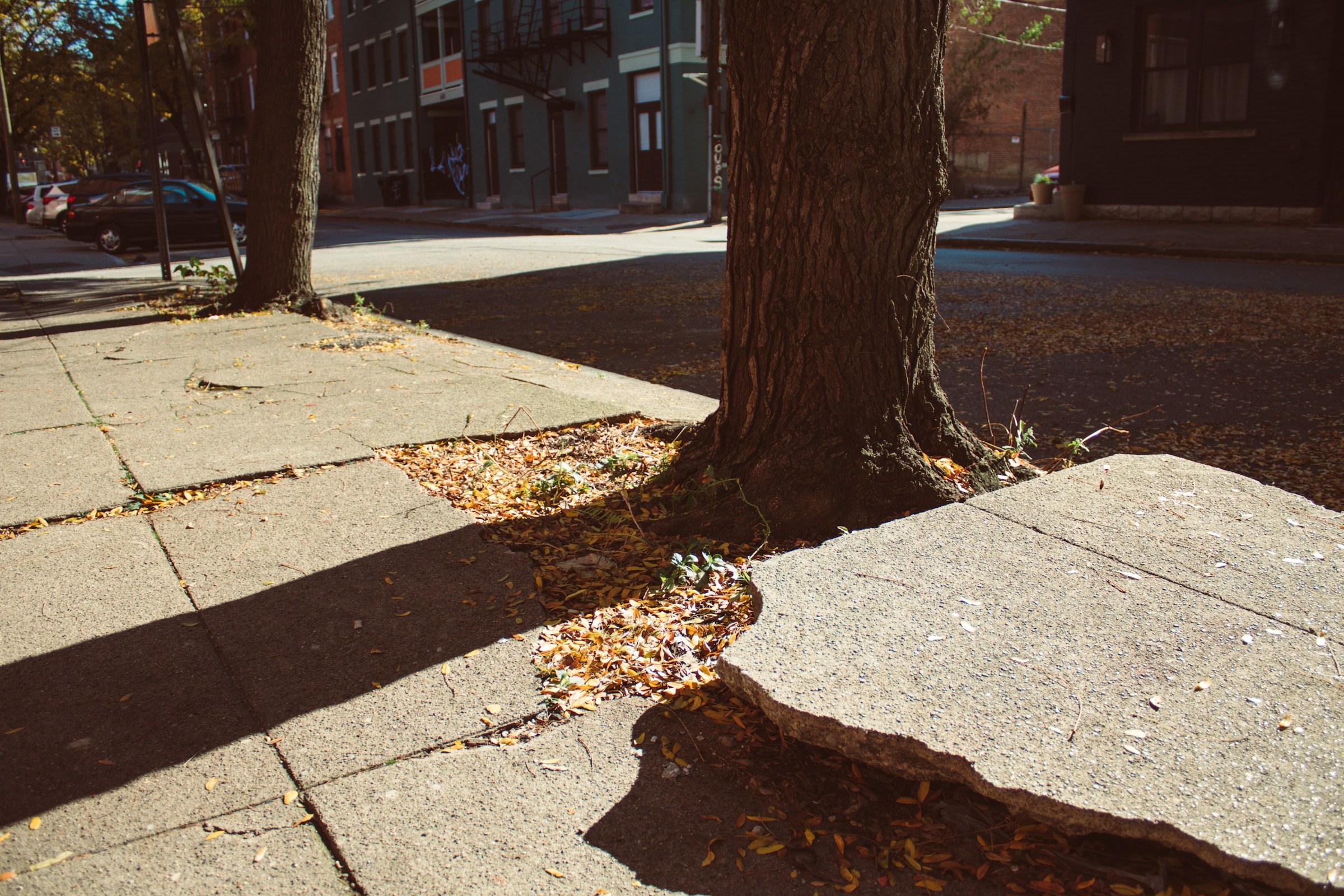
If you tripped on a broken sidewalk in St. Louis city and are wondering who is responsible, the answer is narrower than most people expect. The City of St. Louis can sometimes be held responsible for a dangerous public sidewalk, but only when specific legal conditions are met.
There is also a deadline that many people never hear about. Before a lawsuit against the City can go forward, Missouri law requires written notice to the mayor within 90 days of the fall. That is far shorter than the general five-year period for injury cases.
Tripped on a broken sidewalk in St. Louis city: who is responsible?
The short answer, as of 2026:
- The City may be responsible, but only under a limited exception to sovereign immunity for dangerous conditions of public property (RSMo 537.600).
- Written notice to the mayor is required within 90 days for injuries from defects in a sidewalk, street or similar public way (RSMo 82.210).
- Missing that notice can end the claim against the City, even though the general deadline to file an injury lawsuit is generally five years (RSMo 516.120).
- Someone other than the City may be involved, depending on who owned, controlled or worked on the spot where you fell. An attorney can look at the specifics.
Why sidewalk falls are different from store or apartment falls
A fall in a store, apartment building or business is usually a claim against a private owner under ordinary premises liability rules. Our slip and fall injuries page covers those situations.
Public sidewalks are different because the City is a public entity. Under RSMo 537.600, the sovereign immunity that existed at common law stays "in full force and effect" except where the statute waives it. One of the few waivers covers injuries caused by the condition of a public entity's property. If a fall doesn't fit within that waiver, a claim against the City generally can't proceed.
What has to be shown under the dangerous-condition waiver
RSMo 537.600.1(2), as amended effective August 28, 2026, waives immunity only if the injured person establishes all of the following:
- The property was in dangerous condition at the time of the injury.
- The injury "directly resulted from" the dangerous condition.
- The dangerous condition created a reasonably foreseeable risk of harm of the kind of injury that happened.
- Either a negligent or wrongful act or omission of a public employee, acting within the course of employment, created the condition, or the public entity had actual or constructive notice of the condition "in sufficient time prior to the injury to have taken measures to protect against the dangerous condition."
The 2026 amendment (Senate Bill 916) added language about agents of the Missouri Department of Transportation, meaning private contractors and engineers working on MoDOT projects. Otherwise, these four elements read the same as before.
The fact that someone fell is not enough by itself. A Missouri appeals court has held that the doctrine of res ipsa loquitur ("the thing speaks for itself") can't be used to prove a dangerous condition (Hale v. City of Jefferson, 6 S.W.3d 187 (Mo. App. W.D. 1999)).
Actual vs. constructive notice
Actual notice means the City knew about the defect. Constructive notice is the idea that the City should have known about it, even if no one told it. Facts such as how long the defect had been there can matter. The question under the statute is whether the City had enough time before the fall to take protective measures.
The 90-day written notice requirement (RSMo 82.210)
RSMo 82.210 applies to any Missouri city that "has or may hereafter attain a population of one hundred thousand inhabitants." The City of St. Louis is above that threshold. The statute covers injuries "growing out of any defect in the condition of any bridge, boulevard, street, sidewalk or thoroughfare."
The notice must:
- be in writing;
- go to the mayor;
- be given within ninety days of the occurrence; and
- state the place and the time of the injury, the character and circumstances of the injury, and that the injured person will claim damages from the City.
The clock runs from "the occurrence," meaning the date of the fall. It does not wait for a diagnosis or for you to learn how serious the injury is.
How courts have read it
- In Williams v. City of Kansas City, 782 S.W.2d 64 (Mo. banc 1990), steps from an airport terminal to a parking facility counted as part of a sidewalk and a thoroughfare, so notice was required.
- In Jones v. City of Kansas City, 15 S.W.3d 736 (Mo. banc 2000), a yield sign was not a "bridge, boulevard, street, sidewalk or thoroughfare."
- In Sender v. City of St. Louis (Mo. App. E.D.), a bicyclist crashed on a paved bike path in Forest Park. The court treated the path as a "thoroughfare," so the statute applied. The trial court had dismissed her case because her notice was too vague about where she fell. The Court of Appeals reversed. It asked whether the notice substantially conformed with the statute's purpose: was it definite enough that City officers could investigate and check whether its statements were true?
Sender shows two things. First, the City may challenge how precisely a notice describes the location. Second, courts look at whether imperfect wording still served the statute's purpose. Nothing in these cases suggests that missing the 90-day window itself is excused.
Falls outside the City, or on state routes
Many St. Louis County municipalities are much smaller than the City. RSMo 82.210 by its terms applies only to cities that have a population of one hundred thousand, so different notice rules, if any, may apply in a smaller suburb. The rules for the specific city should be checked.
Falls on a state-maintained route raise other questions. RSMo 82.210 refers to claims against a "city," and the 2026 changes to RSMo 537.600 created a new framework for claims involving MoDOT's private contractors. Who owns and maintains the exact spot can change the analysis.
Is the property owner next to the sidewalk responsible?
It depends on the facts. Being located next to a broken sidewalk does not, on its own, answer the question. What can matter is who created the defect, who controlled that stretch of sidewalk, and whether anyone, such as a utility or contractor, dug up or altered the sidewalk and left it in poor condition.
These questions turn on current Missouri case law and the specific location, so an attorney can review who may properly be named in a claim.
Deadlines and limits at a glance
| Issue | Rule as of 2026 | Source |
|---|---|---|
| Written notice to the mayor | Within 90 days of the fall | RSMo 82.210 |
| Filing a lawsuit | Generally 5 years | RSMo 516.120 |
| Cap on damages against a public entity | $300,000 per person and $2 million per occurrence in the statute, adjusted each January 1 for inflation and published in the Missouri Register | RSMo 537.610 |
| Punitive damages | Not allowed against a public entity | RSMo 537.610.3 |
| Your own share of fault | May reduce recovery | Missouri case law |
The 90-day notice is separate from the five-year filing period. Meeting one does not satisfy the other. Lawsuits against the City are generally filed in the Circuit Court of the City of St. Louis (the 22nd Judicial Circuit).
What to do in the first days after a sidewalk fall
- Get medical care and keep every record and bill.
- Photograph the defect with something for scale, such as a ruler or coin, and photograph the surrounding area before anything is repaired.
- Write down the exact location: nearest address, cross street and landmarks. As Sender shows, location detail can become a disputed issue.
- Collect witness names and contact information.
- Look for prior complaints about the spot, for example reports made to the City's Citizens' Service Bureau. Earlier complaints may bear on whether the City had notice of the defect.
- Consider talking with an attorney before sending the notice to the mayor, so it contains what the statute requires and is sent in time.
If you fell while working, a workers' compensation claim may also be involved. If a fall on public property was fatal, see our wrongful death page. For other injury situations, see our personal injury overview.
Talk with JMH Law Firm
If you were hurt on a public sidewalk or street, the 90-day clock may already be running. Call JMH Law Firm at 314-827-6222 or reach us through our contact page. We have offices in Brentwood and St. Charles.
This post is general information, not legal advice; an attorney can review the specific facts of your situation.
Frequently Asked Questions
Can I sue the City of St. Louis for tripping on a broken sidewalk?
Possibly, but only under narrow conditions. Under RSMo 537.600, you must show the sidewalk was in dangerous condition, the injury directly resulted from it, the risk was foreseeable, and either a City employee created the condition or the City had actual or constructive notice in time to address it. Written notice to the mayor within 90 days is also required.
How long do I have to notify the City of St. Louis after a sidewalk fall?
RSMo 82.210 requires written notice to the mayor within ninety days of the occurrence, as of 2026. The notice must state the place, time, character and circumstances of the injury, and that you will claim damages. The clock starts on the date of the fall.
Is the homeowner or business next to the sidewalk liable if I trip?
It depends on the facts, such as who created the defect and who controlled that part of the sidewalk. A utility or contractor that dug up or altered the sidewalk may also need to be considered. An attorney can review who may properly be named.
Is there a limit on how much I can recover from the City?
Yes. RSMo 537.610 sets caps of $300,000 per person and $2 million per occurrence, adjusted each January for inflation, and punitive damages are not allowed against a public entity.
What if I fell on a sidewalk in a St. Louis County suburb instead of the city?
RSMo 82.210 applies only to cities that have a population of one hundred thousand, and many St. Louis County municipalities are smaller. Different notice rules may apply, so the rules for that specific city should be checked.